Several Thousand Years of History in One Place
The museum accepts bookings for guided tours throughout the year, subject to capacity. In addition, many people experience the museum through our popular events and educational programmes for local schools.
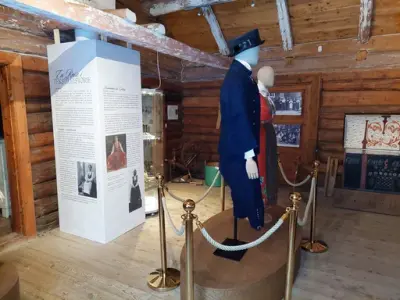
There are several thousand artefacts at Leikvin, many connected to the old agricultural society, as well as many associated with the “salmon lords”. These exhibitions present this fascinating period of Norwegian history. There are also exhibitions on the Second World War, bunad and other traditional folk costumes, hunting and trapping, and archaeology.
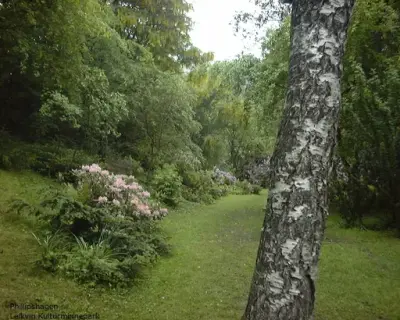
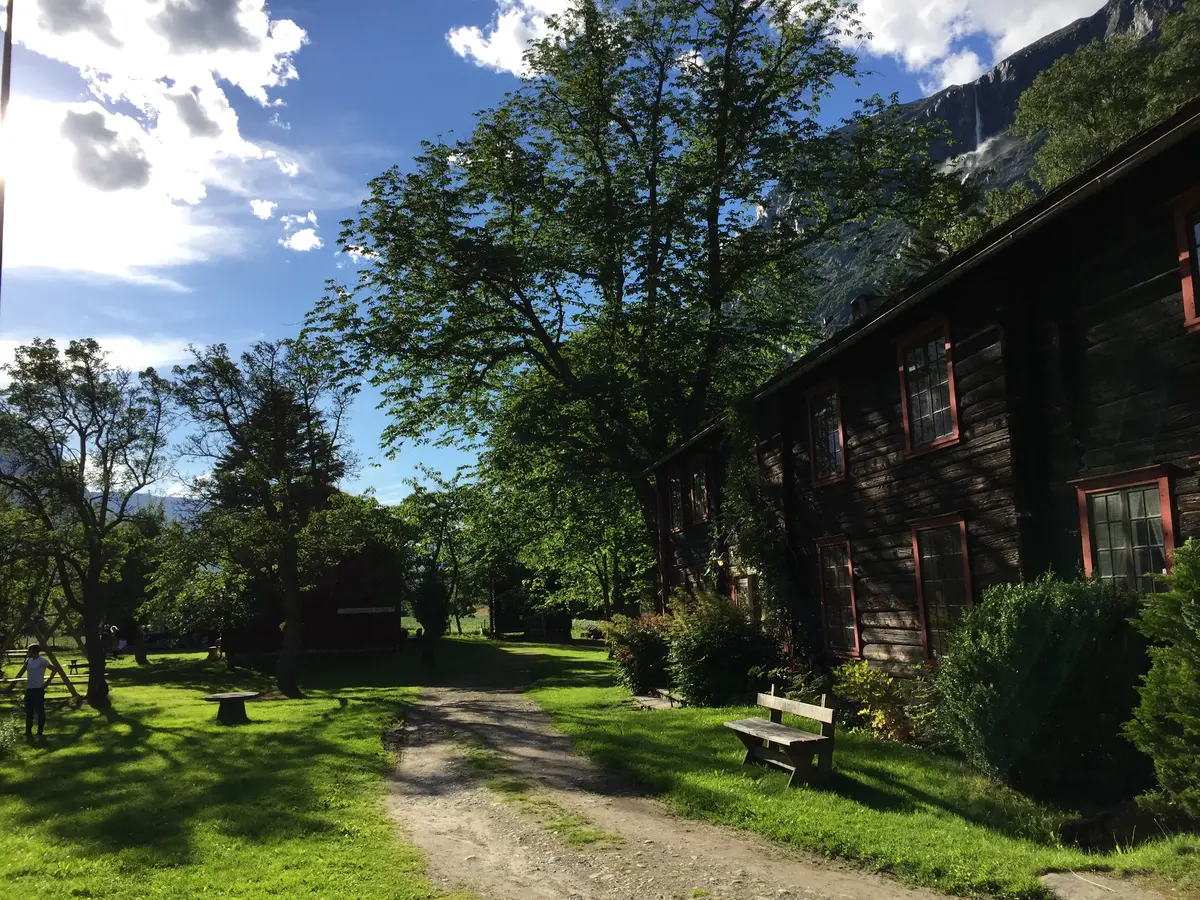
The museum grounds form part of the Leikvin Cultural Heritage Park. The rest of the heritage park can be explored independently. Phillipshagen is a British landscape garden laid out by the Briton Etelbert Lort-Phillips around his house, Hvilestedet. The house no longer exists, but the garden is rich in flowering plants and trees. A path leads down from Phillipshagen to the burial ground at Løykja, one of the country’s largest Iron Age burial sites. The site is equipped with signage in several languages along the path. Guided tours can also be arranged here by the museum’s archaeologist by prior agreement.
The final part of the heritage park is the cemetery at Løykja, where Barbara Arbuthnott and several other central figures in her story are buried. This was also the location of Sunndal’s main church until it was destroyed by a landslide in the 18th century.
Walking in the park is free of charge throughout the year. An admission fee applies for guided tours inside the museum buildings.
The museum also has several other buildings located elsewhere in Sunndal municipality:
· Alfheim
· The fulling mill at Litj-Fale
· The seed-cleaning mill at Smestad
- 1/1
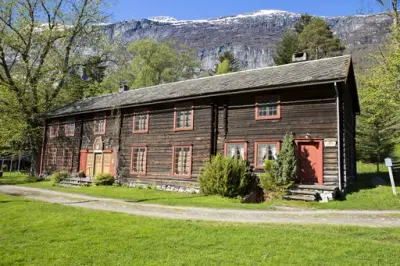
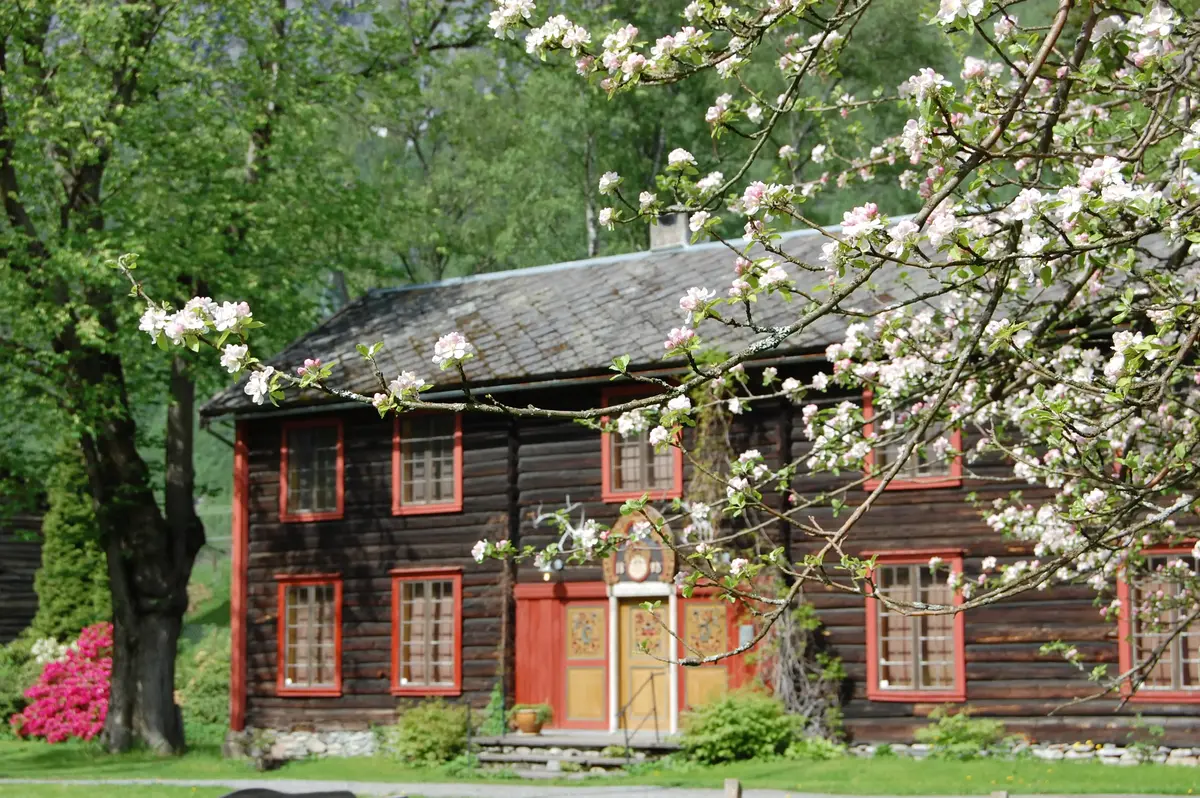
The main building at Leikvin with apple blossoms in the foreground.
- 1/8
Leikvinstøgu på Bygdemuseet Leikvin Jarle Stavik - 2/8
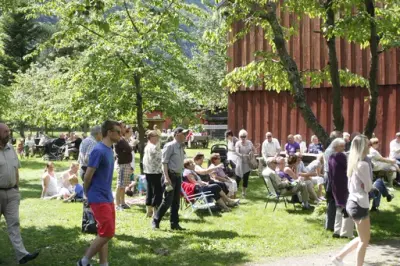
Leikvinstemne på Bygdemuseet Leikvin - 3/8
- 4/8
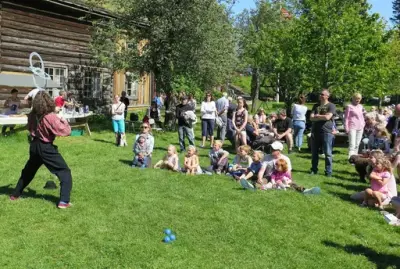
Underholdning under Leikvinstemnet. - 5/8
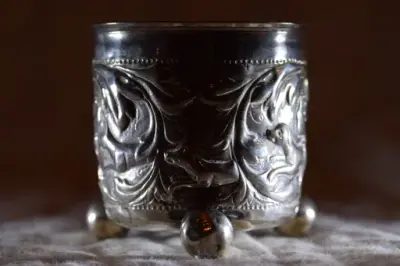
Sunndalsdalføret var kjent for gode lokale kunstsmeder Jarle Stavik - 6/8
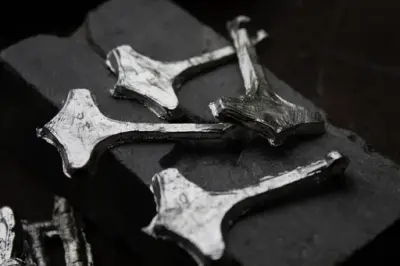
Torshammere i tinn fra tinnstøping med publikum. Silje Gulstad - 7/8
Blomstring i Phillipshagen Alf Harald Dragseth - 8/8
Brudepar i draktutstillingen på Leikvin Jarle Stavik