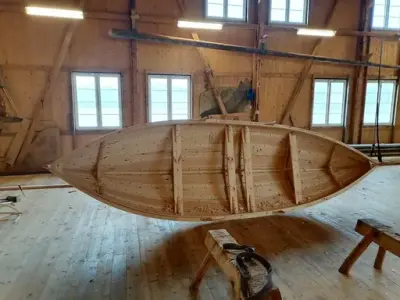
Established to Preserve Regional Building Traditions for Houses and Boats in Nordmøre
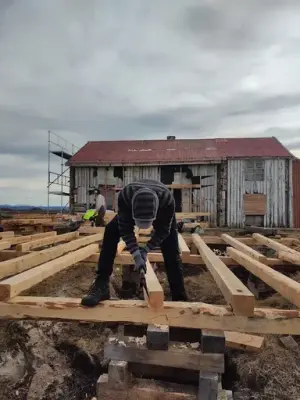
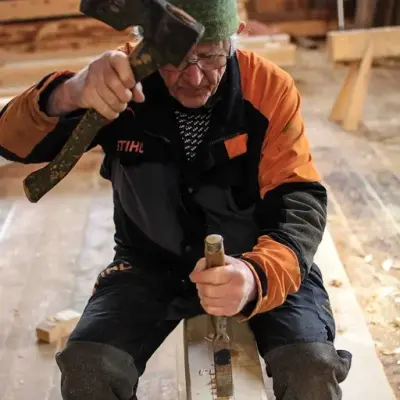
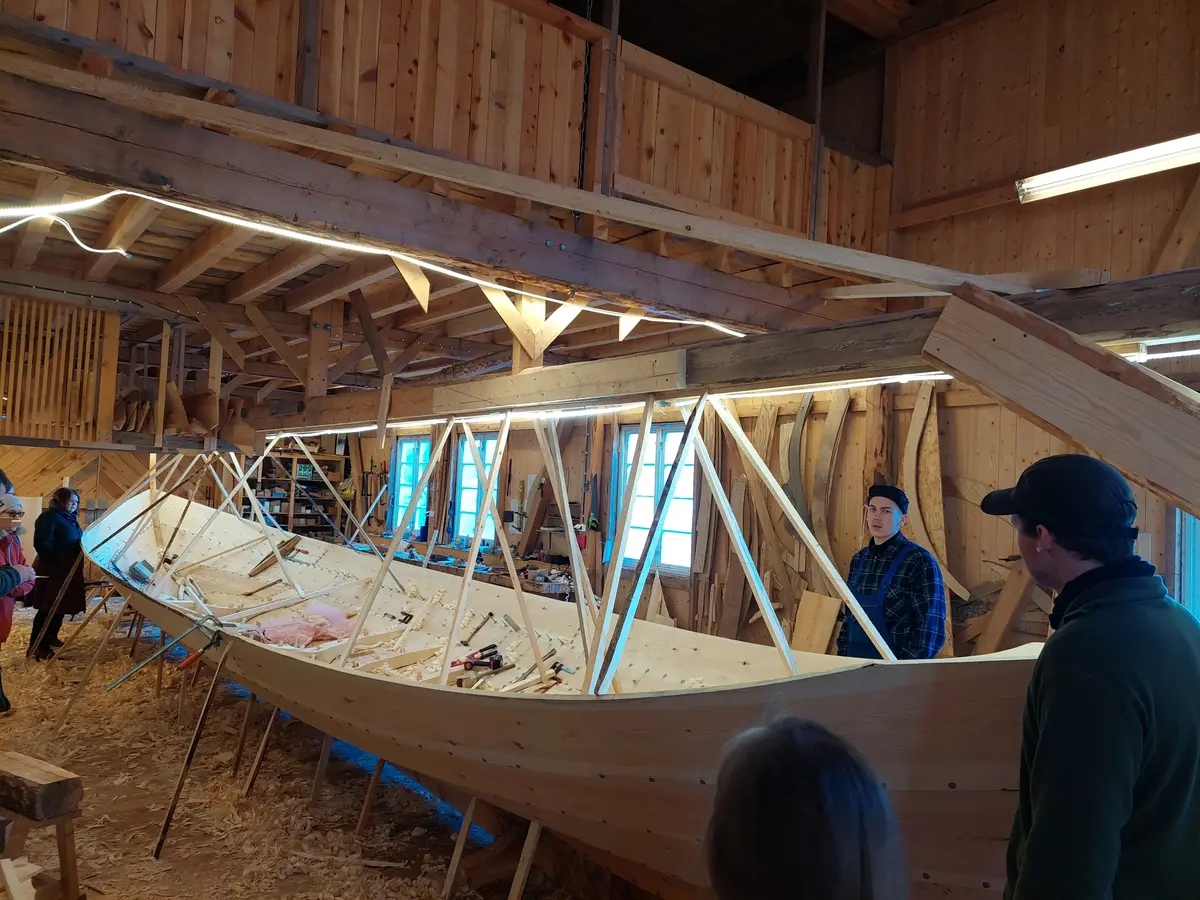
Our own building, also known as Husasnotra, was constructed as a traditional barn typical of Nordmøre. Using timber from a carefully selected forest area in Meldal, a 400-square-metre structure has been erected. The premises were built using methods commonly employed for large agricultural buildings up until around 1950. The construction process itself was organised as training courses in hewing, timber felling, sawing, post-and-beam techniques, raising buildings, and much more.
New Extension Completed in 2025
In 2023, we applied for funding through Håndverksløftet and received support to expand our workshop facilities. This has resulted in a large and impressive extension, now nearing completion at Husasnotra.
The extension mainly consists of two individual post-and-beam structures, both connected to the existing workshop building. The work has been carried out according to Nordmøre building traditions, with adaptations to suit modern use.
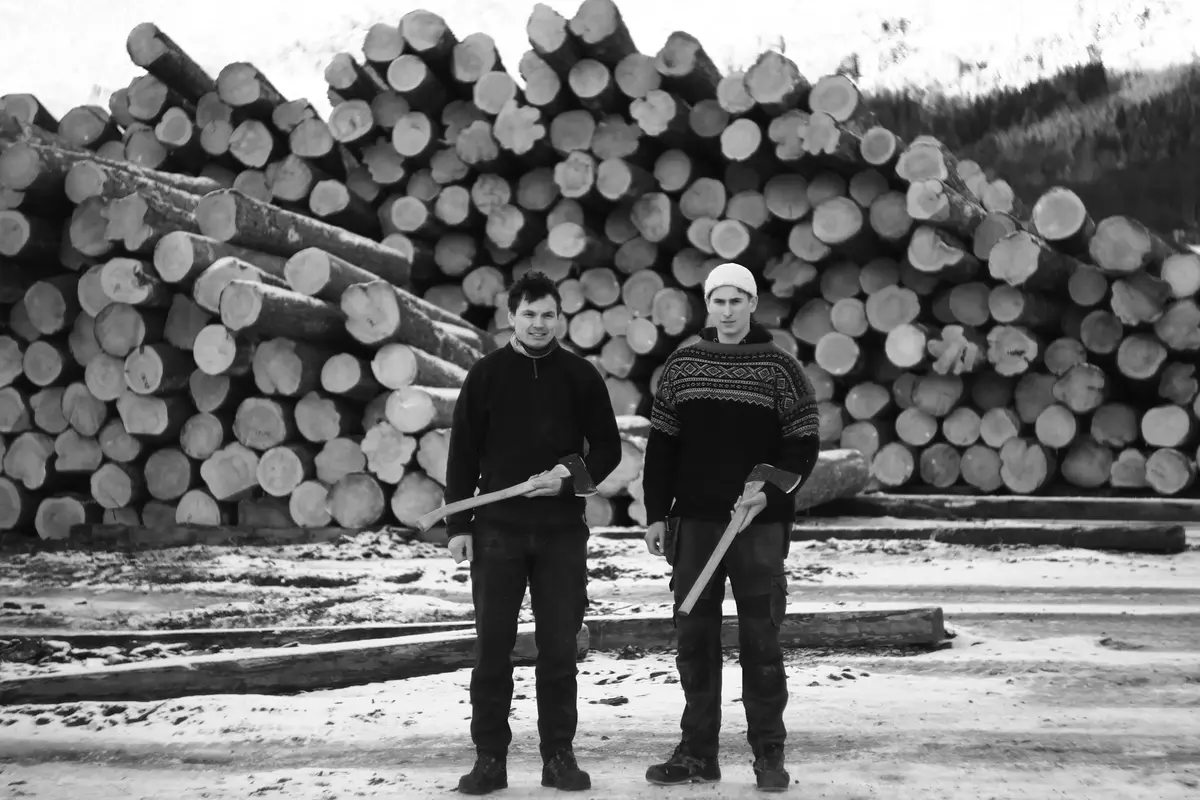
Tallak Prytz and Allan Andreasson have spent three years as trainees in traditional timber construction with us. As their final training projects, they have been responsible for the construction of the extension.
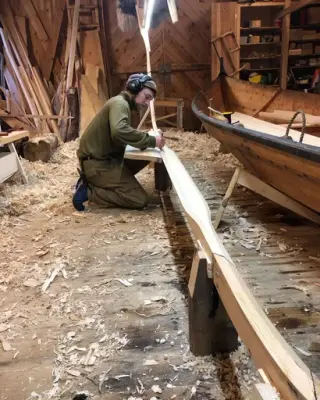
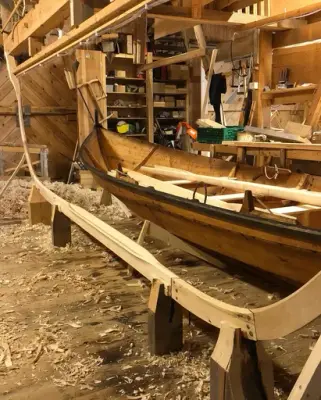
One part of the extension will house a sawmill and material storage for the boatbuilding workshop. The other part will include a multi-purpose room on the ground floor, suitable for activities such as treating newly built boats. The upper floor will be designed as a sailmaking workshop.
This project has also enabled us to make better use of the existing building. Rooms that were previously used for storing museum artefacts will now be transformed into a machine-free woodworking workshop and a dedicated window-making workshop.
This development represents a major upgrade for all of us working at Geitbåtmuseet/Husasnotra, and we look forward to taking on new projects in our new facilities.
“We hope the trainees will act as bellwethers and social ambassadors in their home communities,” says Jon B. Godal.
And what about the unusual word Husasnotra? It has been found twice in old Icelandic texts and was probably the name of a valuable navigational instrument that guided people home — perhaps alluding to “house” in the sense of a constellation. Or, as stated in the project documents:
“A forward-looking, visionary activity built on tradition.”